
Tom Smith
City Varieties, Leeds.
More information about Tom Smith tickets
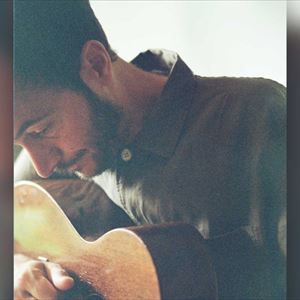
Hard to believe, but it's been 20 years since Editors first swept into view with their debut album The Back Room. And while in that time we've been treated to two Smith & Burrows LPs - 2011's Funny Looking Angels and Only Smith & Burrows Is Good Enough in 2021 -and and made a record that really distils the essence of his songs as they come to him.
"Making a record on my own is something I've been thinking about and that's been inside of me for a long time," says Smith. "I love what we do with the band, but that is a collaboration. That's what I love about our band, but in essence, all the songs I've written over the years start out comi until now, frontman Tom Smith has never stepped outside the collaborative environment of a b ng from a more natural place."
"Whether that's on an acoustic guitar or piano, the band will bring their thing to it, and they all grow and become the things that they've become over the years, which always blows my mind - but they're quite a long way removed from the songs that I've written."
Following the collision of crunching electronica and sky-scraping rock on Editors' last album, 2022's EBM, Smith had a wealth of songs, ideas, and threads which he wanted to land a little closer to those more intimate moments of inspiration.
Initially, he tried them out with long-time friend and collaborator Andy Burrows, before realising that this was a collection of songs that he needed to see through to fruition himself.
"I put a lot of work into it, but it became apparent that - perhaps selfishly - I needed to be less collaborative," Smith recalls. "I could feel an album brewing, and I wanted it to be more representative of those early ideas that I write. One day I just came to a decision and said, 'Andy, I love you, man, but it's not the right time for me to make another Smith & Burrows record...'"
Smith took his songs instead to producer Iain Archer, whom he'd previously worked with on Peter Buck and Gary Lightbody's Tired Pony project. The first day at Archer's Brighton studio, they cut what would become the Rosetta Stone for There Is Nothing In The Dark That Isn't There In The Light.
Subsequently positioned as the album's opening track, Deep Dive begins with a sparse, slowly strummed acoustic, Smith's rich vocals upfront and solemn as the song gently filters more light and hope into the darkness. 'You are not alone when you're lonely', promises Smith, repeating the lyric that would become the record's title as a mantra of hope.
The song signposted the direction of travel for him and Archer to follow, setting the atmosphere for the album and laying out the themes of hope, shared struggles and finding strength in one another that course through the veins of the nine songs that follow.
Listen to it now, and Deep Dive really does feel like one of those classic hand-reaching-out-into-the-darkness songs in the vein of Bridge Over Troubled Water or R.E.M.'s Everybody Hurts. A comparison that elicits a bashful smile from Smith.
"I've spent 20 years talking about how much I love R.E.M. and a lot of American indie music that comes from a bit more of a natural place than Editors do traditionally," he says.
"I knew I wanted this record to feel more natural, to be a stronger representation of the songs as they spill out of me, which most of the time is on an acoustic guitar, just pure and natural. I knew that I needed Iain to help me go on a bit of an adventure and bring these songs to life."
Though the songs on the album present Smith in a much more intimate, organic setting than fans of Editors might perhaps be used to, he and Archer take them across a vast musical landscape. The delicate Endings Are Breaking My Heart delivers its message to move past those cherished moments that we mark our lives by with little more than a gently plucked acoustic, piano and a quiver of strings. But then, coming straight over the ridge, Life Is For Living soon builds into a sweeping, cinematic epic - 'the big music' as you might find on The Waterboys' salt-sprayed masterpiece Fisherman's Blues.
"There's a grandeur to the lyrics and there's a wideness to that phrase, life is for living, so using an arrangement on it was always there as something that we were going to try," says Smith of the track. "That side of my writing has always been there, I enjoy those big gestures, but it's a balancing act with this album, because we didn't want to do too much of it, and to try and do it in a way that was suitable to the music. We wanted the first half of that song to be so intimate and for those hopeful lyrics to resonate, but then for the arrangement to take it somewhere more dramatic."
There Is Nothing In The Dark That Isn't There In The Light is filled with similarly contrasting and complementary textures, throwing each song into relief. Be it the mournful fingerpicking and gentle swell of strings which bring to mind Nick Drake on Broken Time; the wide open guitarscapes of Leave, perhaps the song that falls closest to the point Smith's bandmates might have taken it; or Lost Souls, in which Smith's disembodied voice pings from left to right, adding a playful counterpoint to the main vocal.
"It took a bit of manipulation to find the right mood for that one," says the singer. "Me and Iain took it down one alleyway, but it was a bit too chipper. We were moving the structure of it around, and I repeated the line: lost soul in me. We said to each other, Shall we leave that in? I really like where it takes it, it feels like something Spiritualized might have done."
It's typical of the creative partnership Smith and Archer developed in the studio together, nudging, pulling and leading the songs in different directions until they found their natural home.
"After saying I needed to be less collaborative, I ended up being much more collaborative than I expected to be!" laughs Smith. "I guess I just needed the right collaboration. Sometimes you have these moments where things click into focus and you understand where you're going."
That chemistry is reflected beautifully in the album's sparkling centrepiece, Lights Of New York City: a deeply evocative prism of memories coloured with a yearning romanticism and late-night twinkle redolent of The Blue Nile's sophisticated electropop.
"I'm really proud of that one. It's obviously a very reflective song. I'm pining for that energy and excitement of youth and thinking back to visiting New York in those early days with the band," says Smith. "I love The Blue Nile. The songs on those first two records are so evocative. I had the idea of this kind of lonesome person playing a trumpet on the street corner, just soloing away. It felt connected to some of those records that I love and seemed to suit the imagery of that song. We wanted it to feel like you were standing on a New York street corner."
Smith notes that while it wasn't necessarily intentional, the juncture he currently finds himself at as a musician, husband, and father often infused what he was writing with a sense of looking back, of capturing fleeting moments from the past in song.
Indeed, listening to How Many Times' ode to the hard-won strength to be drawn from companionship, or Northern Line, in which Smith fondly recalls the carefree nights he and Burrows spent darting between the pubs, bars and clubs of London, and it can feel like flicking through a box of beloved old Polaroids.
The album ends on Saturday, an aching, melancholy snapshot of a night out in a "nothing town", hiding within the evening's glare and fading light, and holding on to a moment of connection and intimacy.
"The people in that song don't feel connected to the place they're in; they've lost that connection," explains Smith. "There's the backdrop of an evening out and that energy is there in the headlights, the other people, the noise, but it's ultimately about the intimacy of the moment, of being sat with someone and not wanting that moment to end. It was the last song I wrote for the record, the last song we recorded, and it felt like the perfect way to end the album."
Smith might self-deprecatingly refer to the "sad romance" and "miserable hope" within these songs, but as Saturday's nighttime fades out, you're ultimately left with a feeling of hope, of the strength we can find in one another, and the fact that when the darkness does finally recede, the light reveals what's always been there.